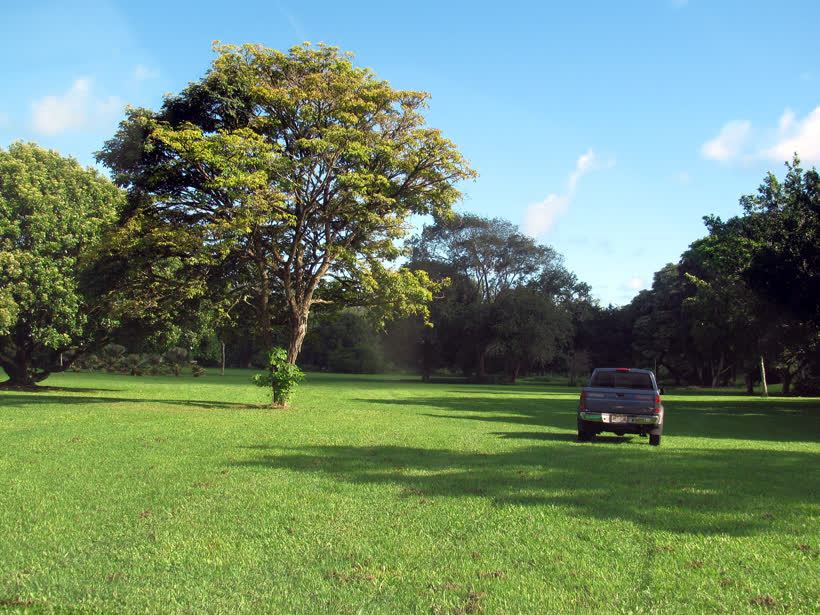
What is St. Augustine grass?
St. Augustine grass (Stenotaphrum secundatum) is a warm-season, tropical lawn grass with broad, flat, blue-green blades. It spreads by thick above-ground runners (stolons) that knit together into a dense, cushiony carpet. It is the grass behind many of the most beautiful resort, estate and villa lawns in warm countries, and at Yuna Farms we grow it as Tuff St. Augustine – harvested fresh on our farm and delivered anywhere in Nigeria.
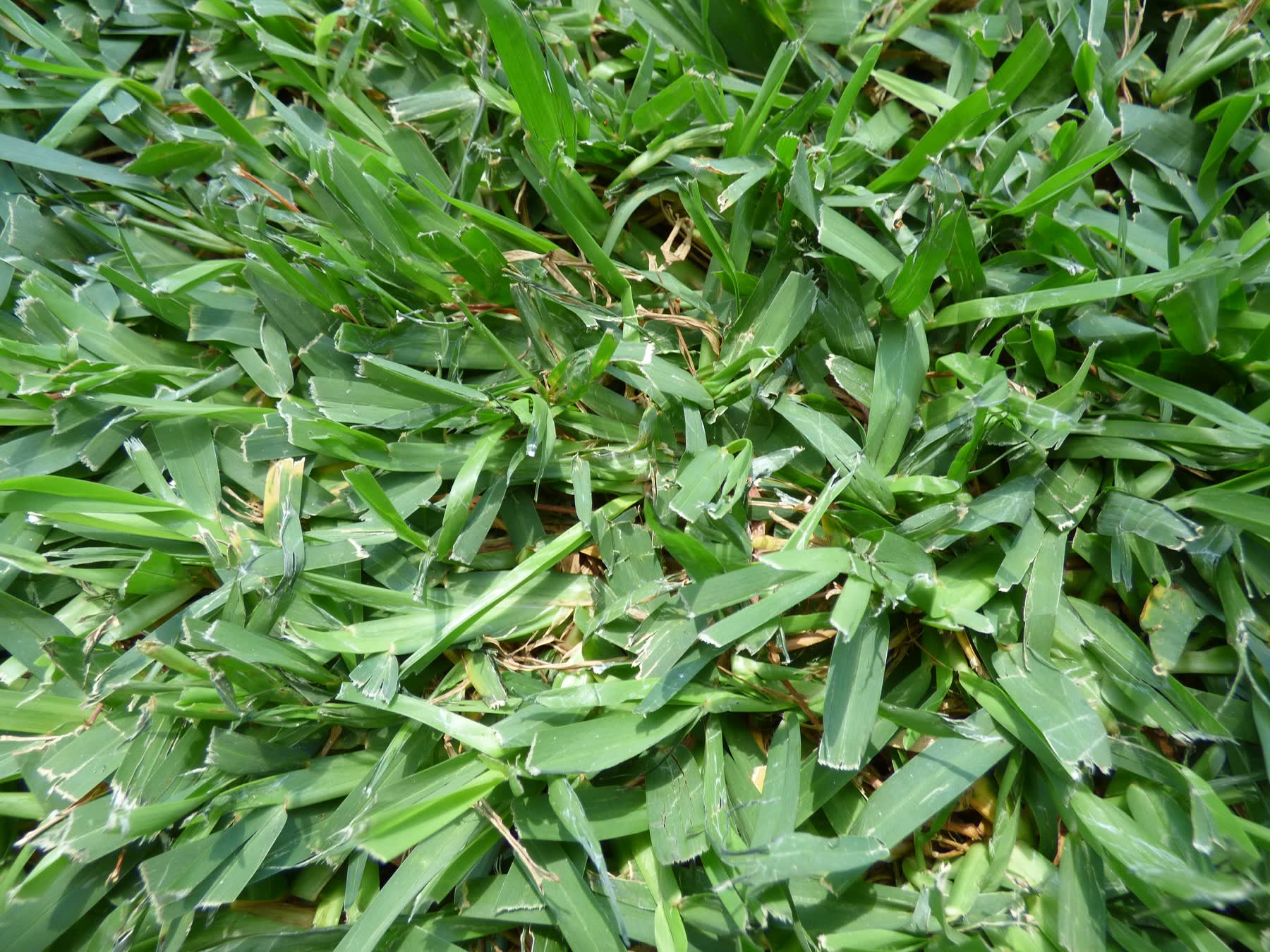
Why it suits Nigeria
- Built for heat. It is a tropical grass: the warmer and more humid it gets, the faster it grows.
- Handles shade. It is the most shade-tolerant warm-season lawn grass and grows well with about four hours of direct sun a day – ideal for compounds with tall fences, buildings and trees.
- Copes with salt. Good salt tolerance makes it a strong choice for coastal Lagos, Port Harcourt, Warri, Calabar, Uyo and other sites near the sea or creeks.
- Crowds out weeds. Its dense mat leaves little room for weeds once established.
- Soft and cool underfoot. A comfortable lawn for children, pets and outdoor events.
St. Augustine vs other lawn grasses
| Grass | Look & feel | Shade | Wear | Best for |
|---|---|---|---|---|
| Tuff St. Augustine | Broad, soft, deep green | Good | Medium | Premium homes, estates, shade, coast |
| Carpet grass (Axonopus) | Broad, light green, low | Fair | Low–medium | Humid areas, low budget, low feeding |
| Bermuda | Fine, dense | Poor | Very high | Sports fields, full sun, dry north |
| Zoysia | Fine to medium, very dense | Fair | High | Manicured showpiece lawns |
| Seashore Paspalum | Fine, bright green | Poor | High | Beachfront, brackish water |
Sod, plugs or sprigs?
St. Augustine produces very little viable seed, so it is always planted vegetatively:
- Sod – slabs of mature grass laid edge to edge. You get a finished lawn the same day, with no bare soil for weeds or erosion. This is what we recommend for most homes and estates.
- Plugs – small squares planted in a grid that spread to fill the gaps. Lower cost, but it takes weeks of watering and weeding to close up.
- Sprigs – loose runners planted into prepared soil. The most economical option for large areas where time is not critical.
How we install it
- Clear and level – remove rubble, weeds and roots, then grade the ground so water runs away from buildings.
- Prepare the soil – add good topsoil where needed so roots have a loose, fertile bed.
- Lay fresh sod – harvested on our farm and laid tightly with staggered joints.
- Roll and water in – rolling presses the roots onto the soil; a deep first watering settles everything.
- Hand over a care plan – a simple watering and mowing schedule for the first weeks.
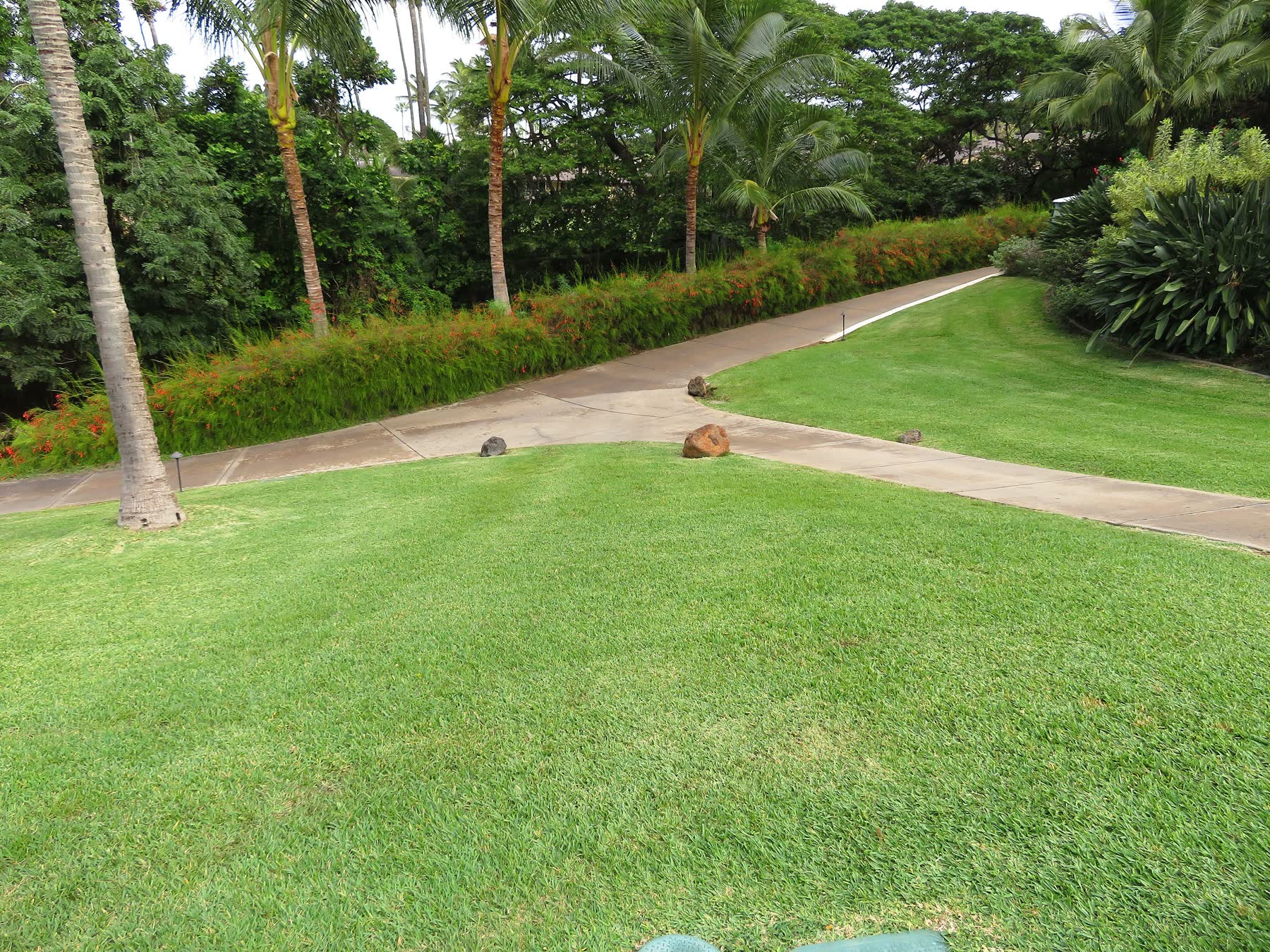
Caring for St. Augustine
Watering
Water new sod every day for the first two weeks, early in the morning, keeping the soil beneath it moist. Then cut back to deep, less frequent watering. Through the dry season and harmattan an established lawn usually needs a deep soak two to three times a week; in the rainy season it often needs none at all.
Mowing
Keep it tall – about 6 to 10 cm. Mowing too low is the most common way to damage St. Augustine. In shady spots, leave it at the higher end. Use a sharp blade and never remove more than a third of the height at once.
Feeding
A balanced lawn fertiliser a few times a year during the rains keeps the colour deep. Avoid heavy feeding in the hottest, driest weeks.
Watch for
Chinch bugs (yellowing patches in hot, dry, sunny spots) and leaf-spot fungus (in very wet, shaded areas). Both are manageable when spotted early – our maintenance visits include checks for them.
Frequently asked questions
Can St. Augustine grass grow in northern Nigeria?
Yes, with irrigation. It loves the heat; it simply needs regular deep watering through the long dry season. For very heavy foot traffic in the north, Bermuda may suit better – ask us.
Can St. Augustine grass be grown from seed?
No. It is planted as sod, plugs or sprigs.
Is St. Augustine better than carpet grass?
For a premium look, yes: it is thicker, softer and greener and handles shade, heat and salt better. Carpet grass costs less and needs less feeding in humid areas. We grow both, so we'll recommend what fits your site and budget.
How much does St. Augustine grass cost?
Price depends on the quantity, sod or sprigs, site preparation and delivery distance. Send your location and size on WhatsApp for an itemised quote.